


What’s the Problem with Last-Click Attribution?
Today, most marketing decisions are (thankfully) based on data - not gut instinct. But data is only useful if it’s interpreted correctly. And if you're relying on flawed models, even the best data can lead you astray.
That’s exactly what happens with last-click attribution. Despite all the advances in analytics, many companies still use this outdated model that gives 100% of the credit for a conversion to the final click.
Here’s how that looks in practice:
A customer sees your TV ad and makes a mental note. Later, they spot your product on a YouTube banner and start to consider it seriously. Eventually, they click a social media ad - and that’s what gets credited with the sale.
So what happens? Social media gets the full credit - and likely a larger share of the budget - even though the earlier brand touchpoints played a big role in that final decision.
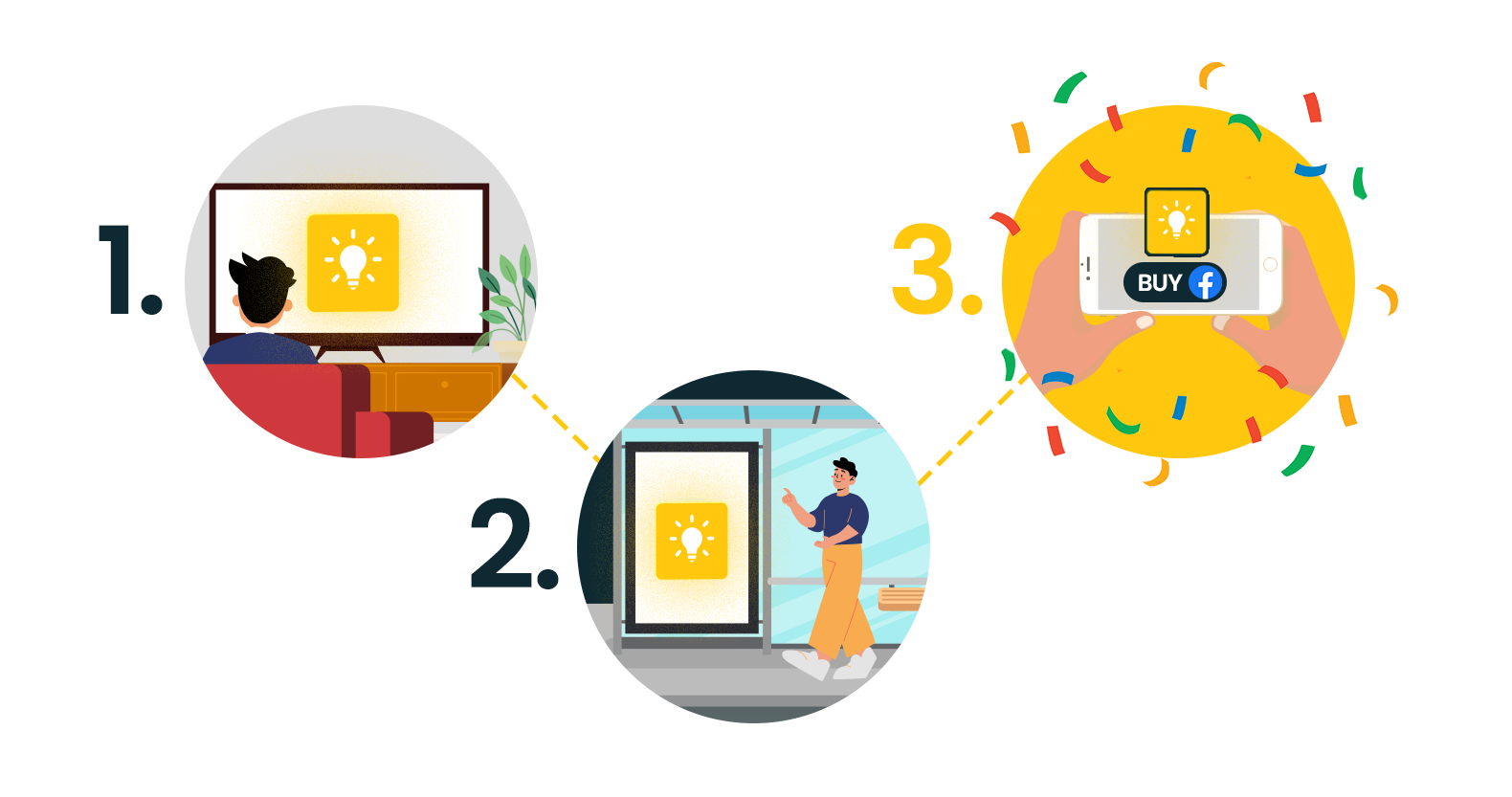 In an omnichannel world, this oversimplified model can seriously distort your budget allocation. But is there a better way?
Last Click: Simple Convenience or Costly Blind Spot?
Last-click attribution became popular for three reasons:
It’s simple – No need for advanced tools or modeling.
It’s fast – Easy to report by linking conversions to the last interaction.
It’s the default – Platforms like Google Ads and Meta Ads use it out of the box.
But here’s what it misses:
It overemphasizes bottom-funnel channels like brand search, retargeting, or email.
It ignores upper-funnel influence from display, social, branded content, and TV.
It completely overlooks offline sales (the ROPO effect: Research Online, Purchase Offline), which are still critical in many industries.
The result? You may end up cutting spend from channels that actually influence buying decisions - just because they aren’t the final click - and funneling more money into channels that look good on paper, but don’t drive real results.
Marketing Mix Modeling: A Smarter, Broader Approach
Marketing Mix Modeling (MMM) offers a more complete view. It:
Combines both online and offline data
Measures how different channels drive sales over time
Accounts for external factors like seasonality, pricing, competitor activity, PR, and more
In real-world use, MMM:
Shows how TV, OOH, radio, or events impact both in-store and online sales - and vice versa
Optimizes budget based on actual ROI, not just click-through rates
Includes the upper funnel in your measurement strategy, something last-click misses
Last Click vs. MMM – Side-by-Side
Criteria | Last Click | Marketing Mix Modeling (MMM) |
Data type | Online only | Online + offline |
Implementation time | Very short | Moderate (but faster with new tools) |
360 campaign view | Low | High |
Technical needs | Low | Higher |
Best for | Online/Performance-only campaigns | Holistic marketing planning |
Which Model Makes Sense for You?
MMM isn’t right for every business. Sometimes, last-click is enough:
You’re only running digital campaigns
You don’t have historical data (e.g., you’re a new company)
Purchase cycles are short
Your budget is tight
But if you:
Run cross-media campaigns
Mix branding with performance
Sell through offline or retail channels
Need to prove marketing’s impact on sales
...you need something more advanced. That’s where MMM comes in.
MMM in Action – With the Right Tools
The good news? MMM is no longer complex or time-consuming. Modern tools like sMMMart AI, are built on frameworks such as Google Meridian, and automate the process by integrating data from platforms like Google, Meta, TV, CRM, and POS. They:
Show the real ROI across all media channels
Deliver actionable, data-based budget recommendations
Offer sales forecasts based on different spend scenarios
Example: 15% Lower Cost Per Conversion

Challenge:
Last-click limitations
No unified model for online, offline, and organic data
Need for fast, actionable insights
Solution:
Implemented sMMMart AI
Integrated data sources, automated MMM, weekly reports, creative performance insights
Results:
✅ Email: Cost per conversion -8%
✅ Social media cost: - 28%
✅ Display & video cost: - 21%
✅ Overall: -15% average cost per conversion
Don’t Get Caught in the Click Trap
Clicks matter - but they’re not the whole story. Real marketing performance is about understanding the entire customer journey, not just the final touchpoint.
If you want to:
Increase ROI
Prove what’s really working
Stop guessing and start optimizing
it’s time to move beyond clicks with MMM.
You Can Start Today
Advanced analytics doesn’t have to wait for a big transformation project. There are steps you can take now to get better results.
That’s why we created this guide:
Inside, you’ll learn:
How to spot flaws in your current attribution model
How to identify real ROI
Where to find “invisible” conversion sources
How to make smarter budget decisions - starting now
Download the guide and see what you can change today.
'%3e%3cpath%20d='M12.0712%205.87001L45.6719%2016.8181L13.7984%2020.4706L12.0712%205.87001Z'%20fill='%232A87DF'/%3e%3cpath%20d='M15.5232%2035.0719L45.6719%2016.8181L13.7985%2020.4706L15.5232%2035.0719Z'%20fill='%232A87DF'/%3e%3cpath%20d='M13.2906%2016.1663L10.5489%2020.8428L13.8004%2020.4706L13.2906%2016.1663Z'%20fill='%23ED1C24'/%3e%3cpath%20d='M13.7985%2020.4705L14.3057%2024.7755L10.547%2020.8428'%20fill='%23ED1C24'/%3e%3cpath%20d='M45.6735%2016.8181L13.2903%2016.1663L10.5486%2020.8428L45.6735%2016.8181Z'%20fill='%231F5F96'/%3e%3cpath%20d='M45.6735%2016.8181L14.3072%2024.7755L10.5486%2020.8428L45.6735%2016.8181Z'%20fill='%233566C0'/%3e%3c/g%3e%3cdefs%3e%3cclipPath%20id='clip0_1746_13129'%3e%3crect%20width='34.6962'%20height='30.5797'%20fill='white'%20transform='translate(15.3242)%20rotate(28.9945)'/%3e%3c/clipPath%3e%3c/defs%3e%3c/svg%3e)
'%3e%3cpath%20d='M11.5674%2011.6151L74.4339%2016.0111L20.8238%2036.2316L11.5674%2011.6151Z'%20fill='%23FFB901'/%3e%3cpath%20d='M30.0747%2060.8505L74.4325%2016.0111L20.8224%2036.2317L30.0747%2060.8505Z'%20fill='%23FFB901'/%3e%3cpath%20d='M18.0934%2028.9749L15.354%2038.2938L20.823%2036.2317L18.0934%2028.9749Z'%20fill='white'/%3e%3cpath%20d='M20.8254%2036.2316L23.5511%2043.4907L15.3564%2038.2937'%20fill='white'/%3e%3cpath%20d='M74.4337%2016.0111L18.094%2028.9749L15.3546%2038.2938L74.4337%2016.0111Z'%20fill='%23CA9200'/%3e%3cpath%20d='M74.4337%2016.0111L23.5493%2043.4907L15.3546%2038.2938L74.4337%2016.0111Z'%20fill='%23DEA100'/%3e%3c/g%3e%3cdefs%3e%3cclipPath%20id='clip0_1746_13099'%3e%3crect%20width='61.8621'%20height='54.7921'%20fill='white'%20transform='translate(14.6797)%20rotate(15)'/%3e%3c/clipPath%3e%3c/defs%3e%3c/svg%3e)

'%3e%3cpath%20d='M21.2539%2011.4723C21.2539%2017.1352%2016.6629%2021.7262%2011%2021.7262C5.3371%2021.7262%200.746094%2017.1352%200.746094%2011.4723C0.746094%205.80939%205.3371%201.21838%2011%201.21838C16.6629%201.21838%2021.2539%205.80939%2021.2539%2011.4723Z'%20fill='white'/%3e%3cpath%20d='M17.1273%2012.2972V16.5249H14.6765V12.581C14.6765%2011.5903%2014.3231%2010.9138%2013.435%2010.9138C12.7585%2010.9138%2012.356%2011.3699%2012.1784%2011.8108C12.1132%2011.9679%2012.0972%2012.1865%2012.0972%2012.4079V16.5249H9.64549C9.64549%2016.5249%209.6785%209.8446%209.64549%209.15304H12.0972V10.198C12.0927%2010.2061%2012.0856%2010.214%2012.0811%2010.222H12.0972V10.198C12.4229%209.69654%2013.0039%208.97979%2014.3061%208.97979C15.9189%208.97979%2017.1273%2010.0338%2017.1273%2012.2972ZM7.08226%205.59985C6.24328%205.59985%205.69531%206.15053%205.69531%206.87347C5.69531%207.5812%206.22724%208.14696%207.05014%208.14696H7.06532C7.92033%208.14696%208.45226%207.58124%208.45226%206.87347C8.43618%206.15057%207.92033%205.59985%207.08226%205.59985ZM5.8408%2016.5249H8.2907V9.15304H5.8408V16.5249Z'%20fill='%233579B0'/%3e%3c/g%3e%3cdefs%3e%3cclipPath%20id='clip0_1830_427'%3e%3crect%20width='21'%20height='21'%20fill='white'%20transform='translate(0.5%200.936218)'/%3e%3c/clipPath%3e%3c/defs%3e%3c/svg%3e)